Influencer marketing agency work with audience vetting and sales tracking

Influencer marketing works when the creator speaks to your audience and believes in the product. We select creators by their real audience rather than their follower count, check their statistics, agree terms, prepare the brief, make sure the post is properly disclosed as advertising and measure how many sales each collaboration brought.

Reply within 15 minutes · project assessment — free · pricing on request

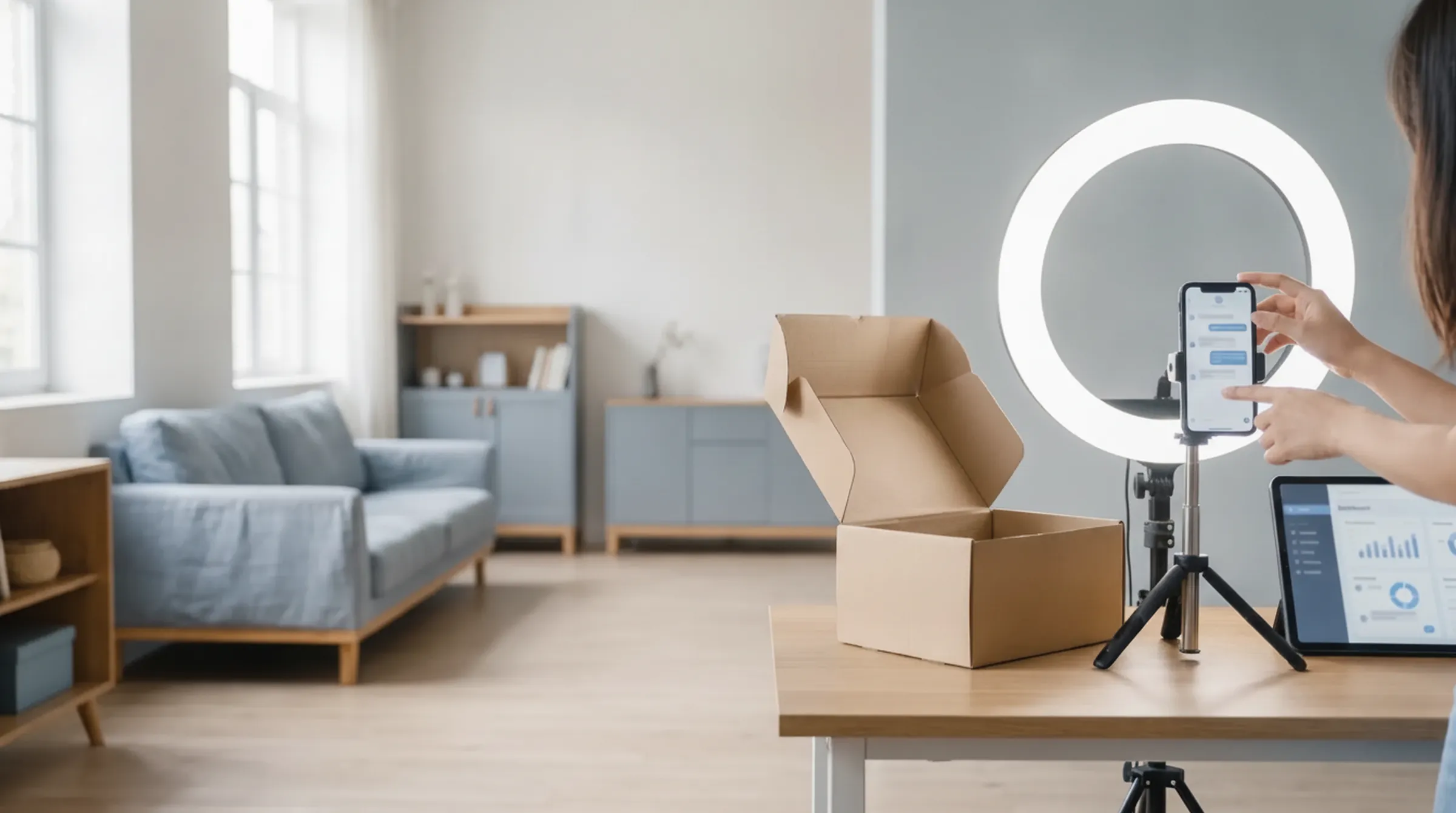
A creator’s home studio: a ring light, a smartphone on a tripod and a product box on the table set up to film a sponsored video

An influencer marketing agency arranges paid collaborations in which creators feature your product in posts, videos and stories on Instagram, TikTok, YouTube, LinkedIn and other networks. The agency selects creators for your target audience, checks their statistics for fake engagement, agrees the format and script, ensures proper advertising disclosure and tracks results through codes and tagged links.

Why buying influencer ads doesn’t bring sales

The mistakes after which a business decides that “influencers don’t work”. Most of them are visible before you pay.

“We paid a huge creator and got almost no sales”

A big audience didn’t match your customer: followers from another region, another age group or with other interests.

We ask the creator for audience statistics: gender, age, location, devices. We choose by how well the audience matches your customer, not by reach.

“The reach looks great, but there’s no reaction from real people”

Bought followers and views don’t buy, and the budget is already spent.

We check growth history, the ratio of reach to followers, the quality of comments and the results of past sponsored posts.

“The creator filmed something other than what we expected”

The product appears briefly, the main benefit isn’t mentioned, the link is in the wrong place. A reshoot is impossible or costs extra.

We prepare a brief: key messages, don’ts, required elements and approval deadlines. We approve the script before filming.

“We can’t tell which collaboration paid off”

Several creators posted in the same week, sales rose, and there’s no way to know whom to renew.

Each creator gets their own discount code, a link with tracking parameters and, when needed, a separate landing page.

What influencer campaign management includes

We take on the whole chain from strategy to report. You approve the key decisions instead of messaging dozens of creators.

Strategy

We define the goal: sales, awareness, a product launch, reviews. It decides the platforms, the format and the size of creators.

Creator selection

We find creators by niche and audience and build a shortlist with reach, statistics and terms.

Fake engagement checks

We analyze follower growth, engagement, comments and previous sponsored posts.

Negotiation

We agree the format, deadlines, the number of revisions, content usage rights and terms for reposting.

Content brief

Key messages, restrictions, required elements, a discount code and a link. We agree the script before filming.

Ad disclosure

Clear disclosure of the paid relationship in every post, using the platform’s paid-partnership tools and clear wording, in line with FTC rules in the US and ASA and CMA guidance in the UK.

Publication control

We check that the post goes live on time and in the approved form, with the disclosure in place.

Analytics

Clicks, codes, leads and sales per creator. Recommendations on whom to continue with.

Where to run influencer campaigns and how the platforms differ

We choose the platform by audience and product. A campaign often spans two or three networks.

PlatformFormatsWho it suits
InstagramPosts, Reels, Stories, collaboration posts, partnership ads that run through the creator’s handleConsumer brands, beauty, fashion, food, lifestyle, local businesses
TikTokShort videos, creator-made ads, product demosProducts that can be shown quickly, younger audiences, impulse purchases
YouTubeIntegrations in long videos, dedicated reviews, ShortsComplex products that need showing and explaining, tech, education
LinkedInPosts and newsletters from industry voicesB2B services, software, finance, recruitment

Free project estimate and quote

Leave your contact — we'll review the task and send a quote with a scope breakdown and timelines. No pushy sales call.

Thank you! Request received — we'll get back with the estimate and quote within one business day.

How an influencer campaign runs

We start with a test wave on several creators of different sizes, then scale what worked.

Step 01

Brief

Product, audience, geography, campaign goal, and the advertising restrictions that apply to your category.

Step 02

Shortlist

A list of vetted creators with audience, reach and terms. Together we choose who goes into the test.

Step 03

Contract and brief

We fix the terms, deadlines and content rights. We send the creators the content brief.

Step 04

Approval

We review the script or draft and request changes before publication.

Step 05

Publishing and disclosure

We watch the post go live and check that the disclosure is correct and visible.

Step 06

Report and next wave

We compare creators by cost per lead and per sale and build a scaling plan.

Who it’s for, and who it isn’t

A good fit if

  • Products that are easy to show on camera: cosmetics, clothing, gadgets, food, home and kids’ goods.
  • Services and online schools that need a trust-based recommendation format.
  • Brands entering marketplaces such as Amazon or new regions.
  • Companies that want reviews and user-generated content for their ads.

Not a fit if

  • Products whose advertising is restricted or requires permits you don’t have.
  • You need leads tomorrow at a fixed price: influencer advertising needs testing and preparation time.

Disclosure rules for influencer advertising

A paid collaboration is advertising, and the audience has to be able to tell. In the US, the FTC’s Endorsement Guides require a clear and conspicuous disclosure of any material connection between a brand and a creator: payment, free product or any other benefit. A tag such as #ad or “Paid partnership”, placed where people will see it, is the usual way; hiding it in a hashtag pile or behind a “more” link is not enough. The responsibility lies with both the brand and the creator.

In the UK, the Advertising Standards Authority and the Competition and Markets Authority expect ads to be clearly labeled in a similar way, and creators are expected to make the label prominent. In the EU, consumer protection and unfair commercial practices rules apply, and member states enforce them through their own advertising and consumer authorities, so we check the requirements of each market you run a campaign in.

Platform rules sit on top of the law. Instagram, TikTok and YouTube all provide paid-partnership or branded-content tools and expect creators to use them. Restricted categories, such as health, finance, alcohol or supplements, carry extra rules, and some claims need substantiation. We build these requirements into the content brief and review the draft before it goes live.

How creator posts fit into the broader work on social networks is covered in what social media marketing is. If you want to combine creators with paid campaigns, our paid social team can reuse the best content as ads.

How to choose a creator: audience size and format

Large creators bring reach and awareness, but their audience is mixed and a placement costs a lot. Smaller creators in a narrow niche often convert better, because followers trust them like a friend who knows the subject. For a test, we usually pick several creators of different sizes.

The format depends on the product. Something people need to try is best shown in a video review or a short clip. A service that needs explaining fits a detailed post or an integration in a longer video. For quick sales with a discount code, Stories with a link work well.

The price of a placement is set by the creator, and it varies widely with niche, platform and season. We compare offers not by cost per post but by the expected cost of reaching your target audience.

FAQ: Influencer marketing

We price our agency work on request after the brief. Each creator sets their own rate, which depends on platform, niche, format and season. In the media plan we show each creator’s terms before you pay.
We look at follower growth without sudden jumps, the ratio of reach to followers, genuine comments and audience statistics from the creator’s own analytics. We exclude suspicious creators from the shortlist.
Yes. A paid or gifted collaboration has to be clearly disclosed, using the platform’s paid-partnership tool and plain wording such as #ad. We build disclosure into every brief and check it after the post goes live.
We give each creator their own discount code and a link with tracking parameters, and a separate landing page if needed. We count leads and sales per creator and compare them with the placement cost.
In a flat-fee collaboration, the creator is paid for the content regardless of sales. In affiliate marketing, they earn commission on tracked sales. Many campaigns combine the two, with a fixed fee plus a code that pays a share.
Big creators give reach, micro-influencers often give trust and conversion. For a test we mix sizes and then put more budget behind whichever pays back.
Yes, if the content usage rights are written into the contract. We agree this at the negotiation stage, so the video can run as a paid social ad, for example as a partnership ad.

Service areas

Tell us about your task — we'll come back with a quote and timeline

In response you'll get a project estimate, a quote broken down by scope, and timelines. Usually within one business day. Free, no strings attached.

4 of 6 project slots open this week.

Request received

Thank you! We'll get back with the project estimate, the quote and the timeline — usually within one business day.

More from Growth Bureau

Get an estimate